
Looking for an alternative to Qlik? Discover Zoho Analytics - a modern, cost-effective, and one of the best alternatives to Qlik for data analysis and visualization.
Qlik is analytically powerful but more challenging to implement and less user-friendly for business teams without strong technical support; complexity and costs increase with scale.
Zoho Analytics delivers many features in a single, more accessible model. It offers a free plan (up to 2 users and 10,000 data rows), and paid plans start from $25 per month per account (Basic plan, 2 users) - billing is per account/workspace, not per user. Additionally, it includes over 500 native connectors, AI as standard, and deployment options in the cloud, on-premise, and private cloud.
Check out our summary - details below.
What makes Zoho Analytics the best alternative to Qlik?
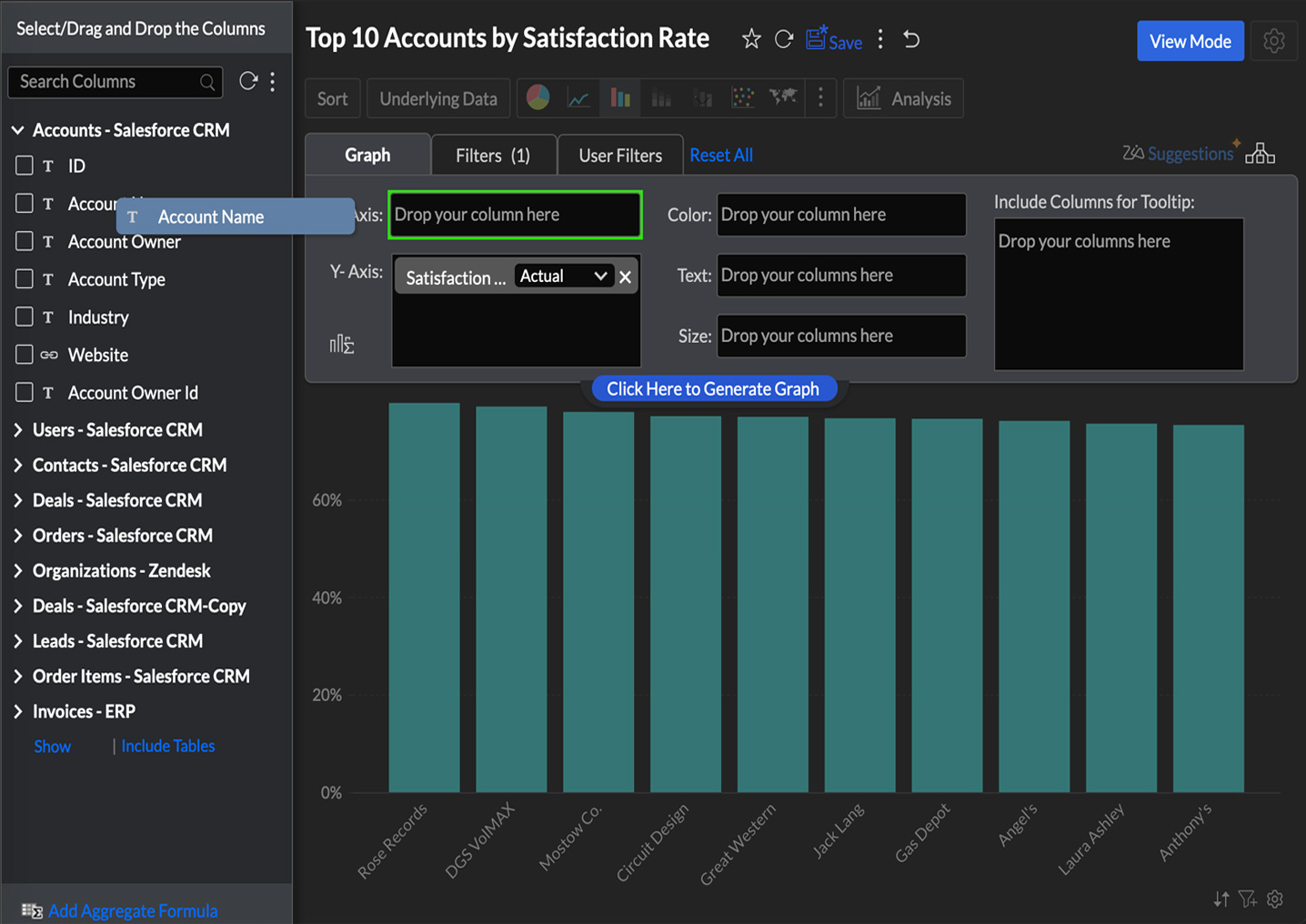
Ease of Use
✅ Intuitive drag-and-drop interface
✅ Create visualizations in minutes
✅ A single, consistent interface - from data to insights to actions
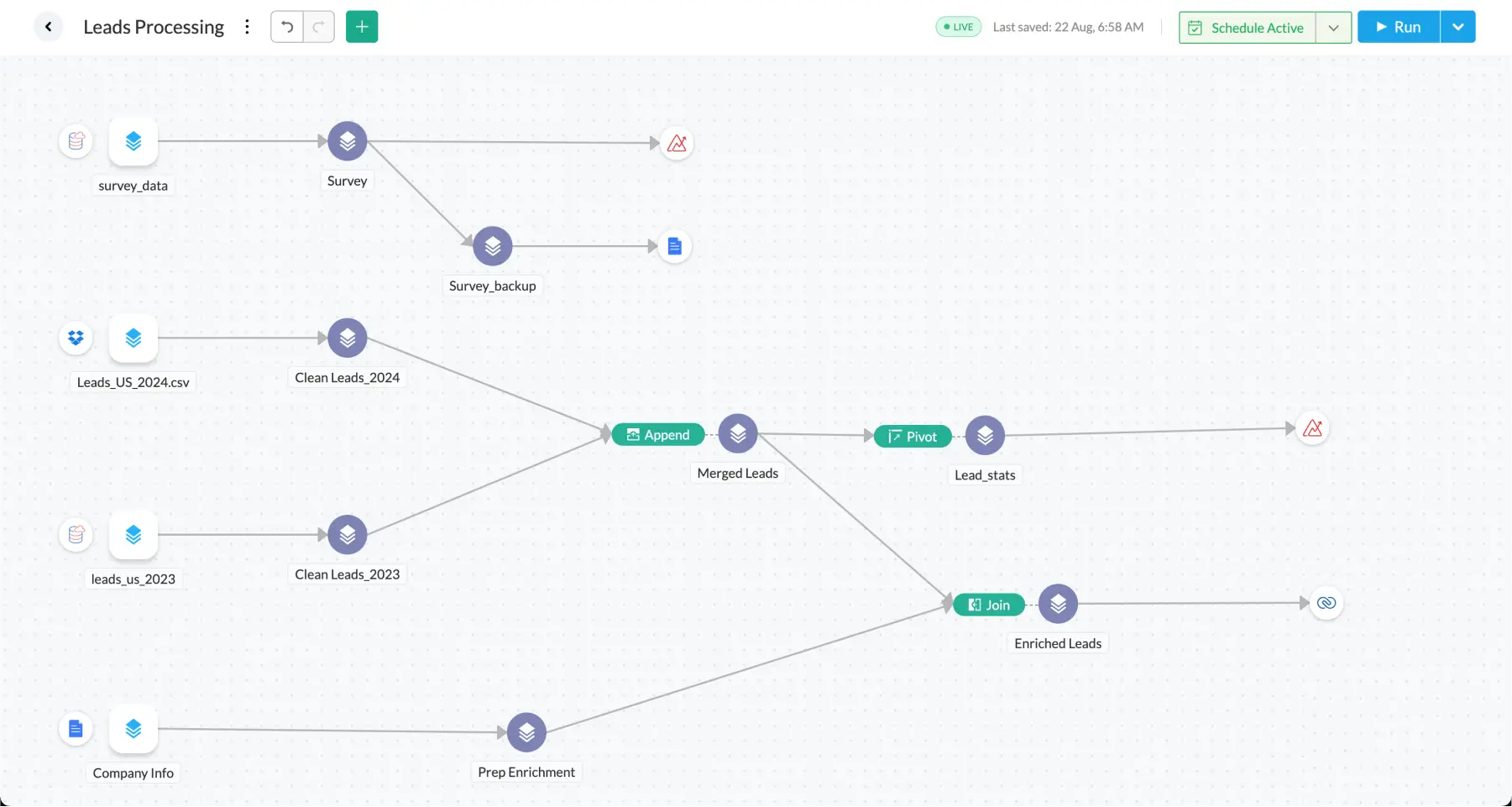
Data preparation and pipeline building tool
✅ Easy pipeline configuration for seamless data integration
✅ Data cleaning, transformation, enrichment, and modeling - no coding required
✅ Centralized metric management to define and monitor all key business KPIs
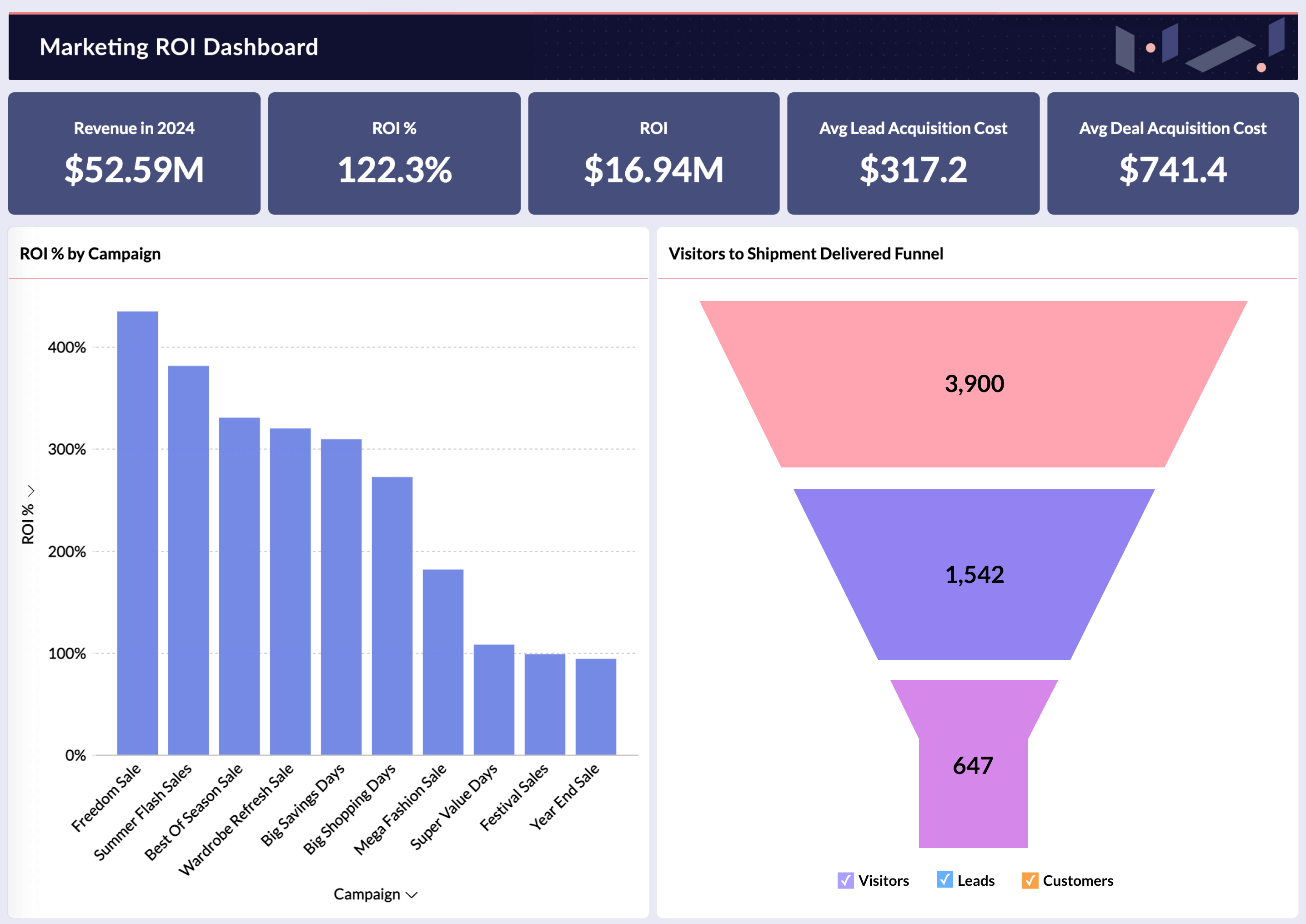
Unified Business Analytics
✅ Ready-to-use integrations with over 100 business applications
✅ Pre-built metrics, reports, and dashboards for specific business areas
✅ Automatic data blending from various business applications, providing a complete, 360-degree view
Price Comparison: Zoho Analytics vs Tableau
For 200 users, Zoho Analytics costs $9,216 annually, while Qlik Cloud Analytics Standard starts from $9,900 annually, and Qlik Cloud Analytics Premium from $33,000 annually. This offers a real saving of 7% vs Qlik Standard and 72% vs Qlik Premium.
Zoho Analytics vs Qlik: Key Feature Comparison
1. Data Integration, Preparation, and Blending
Zoho Analytics offers over 500 native data connectors, facilitating quick connection of multiple sources without additional configuration. The platform also has built-in data preparation features, allowing data to be cleaned, transformed, and organized without the need for separate add-ons. Additionally, Zoho Analytics automatically blends data from various sources, which simplifies analysis and shortens report preparation time.
Qlik also offers extensive data integration capabilities, however, additional connectors may be needed for some sources. Advanced data preparation often requires coding or additional configuration, and data blending usually involves manual connection setup.
2. Visualization, Reporting, and Automation
Zoho Analytics provides over 50 customizable visualization types, allowing for quick creation of clear reports and dashboards. The platform also enables simple automation of data workflows and reporting.
Qlik offers powerful data visualization capabilities, but their utilization often requires more technical knowledge. Automation in Qlik is extensive, however, it can be more complex to implement and configure.
3. AI, Predictive Analytics, and Machine Learning
Zoho Analytics leverages Zia AI to generate automated insights and analytical support. The platform also offers built-in DSML Studio tools, enabling predictive analytics and anomaly detection without the need for coding.
Qlik provides insight features and augmented analytics, but focuses less on generative analytics. Machine learning is available, but typically requires the use of Qlik AutoML or additional configuration.
4. Implementation, Scalability, and Customization
Zoho Analytics offers flexible deployment options in the cloud and in a hybrid model. The platform easily scales with growing data and organizational needs, without excessive cost increases. It also allows for extensive customization of reports and dashboards to specific business requirements.
Qlik is available both in the cloud and on-premise, but its environment can be more challenging to maintain. Scaling is possible, but costs typically increase with infrastructure expansion. Customization is also available, but often requires greater resources and technical expertise.
5. Collaboration, Global Presence, Compliance, and Security
Zoho Analytics supports real-time collaboration and easy sharing of reports and dashboards. It offers a strong global presence, multilingual support, and data centers worldwide. The platform complies with standards such as ISO/IEC 27001, 27017, 27018, SOC 2 Type 2, GDPR, and HIPAA.
Qlik also provides enterprise-level compliance and covers industry regulations. These include ISO 27001, SOC 2 Type 2, SOC 3, and GDPR. However, some collaboration features may require higher pricing plans.
Summary
Zoho Analytics is a good alternative to Qlik for companies looking to simplify data operations, create reports and dashboards faster, and reduce the need for advanced technical configuration. The platform combines data integration, data preparation, automatic source linking, visualization, reporting, automation, and AI functionalities all in one environment.
Compared to Qlik, Zoho Analytics can be more accessible for business teams who want to analyze data independently without needing to involve technical specialists at every stage of their work. With over 500 native connectors, built-in data preparation features, Zia AI tools, and DSML Studio, Zoho Analytics enables a faster transition from data to concrete business decisions. Additionally, its favorable cost model makes the platform an attractive choice for both smaller teams and larger organizations developing business analytics.
Want to replace Qlik with more accessible analytics from Zoho?
We will show you how to use Zoho Analytics to automate reporting, monitor KPIs, and make better business decisions. We will implement Zoho Analytics, connect data from various sources, streamline the data preparation process, and create dashboards tailored to your team's needs. Contact us to improve how your company works with data.